

What is a solar eclipse?
A total solar eclipse is an astronomical event in which the Moon positions itself exactly between Earth and the Sun, completely obscuring the Sun for a few minutes.
In that moment, the sky darkens dramatically, transforming day into night and revealing a spectacular yet rare phenomenon. While total solar eclipses occur worldwide about every 18 months, the path of visibility is so narrow that, from any single location on Earth, one might only be seen roughly every 350 years – though some fortunate spots may experience two or more in much shorter intervals.
In Catalonia, the last total solar eclipse visible from any part of the territory was on 30 August 1905. The next one after 2026 won’t occur until 17 November 2180, followed by another wait of more than two and a half centuries until 2433. These facts underscore the significance of the 12 August 2026, eclipse.
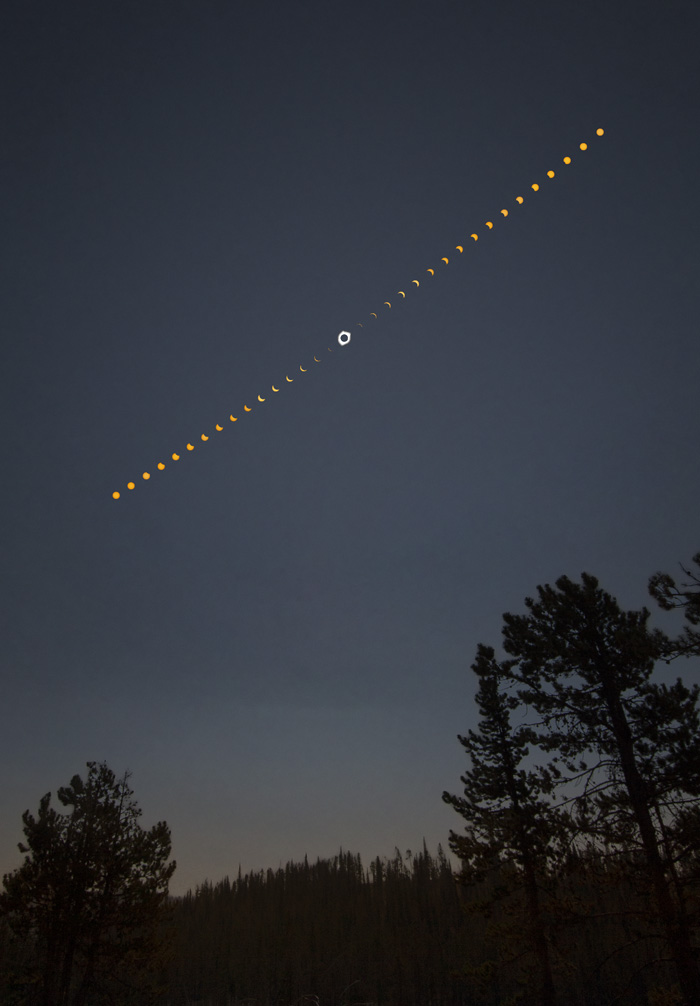
Photographic composition of the eclipse 2017 / IEEC (E. Masana).
The 12 August 2026, eclipse in Catalonia
In this case, the path of totality will cross the southern third of the territory, allowing locations like Tarragona and Lleida to experience the full phenomenon.
The eclipse will occur in the late afternoon, between 7:30 p.m. and 9:00 p.m., depending on the location. The totality phase – the most anticipated moment – will last up to 1 minute and 30 seconds in some southern areas of Tarragona.
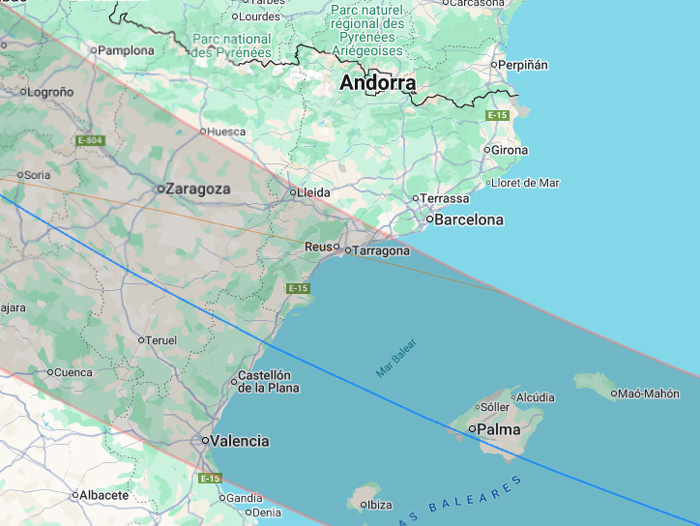
Map of the 2026 total solar eclipse / © Xavier Jubier
To help plan your observation of the 2026 solar eclipse, consult this municipality search tool.
For each municipality, you can view the exact timings of the eclipse’s various stages.
During totality, the Sun will be less than 5 degrees above the horizon (a standard astronomical measure indicating it’s very low in the sky), which may affect visibility based on local terrain.
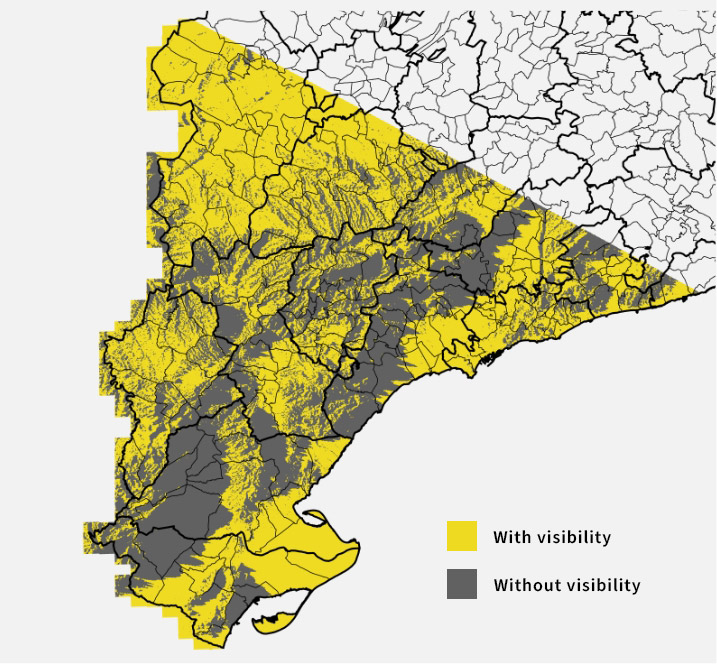
Map of eclipse shadows for 12 August 2026 / IEEC.
Future eclipses
A total solar eclipse is as spectacular as it is rare in any given location. The fact that the path of totality is so narrow, combined with the brief duration of the phenomenon, means that the areas where one can observe it and truly enjoy a remarkable experience are extremely limited. However, the 12 August 2026 total eclipse won’t be the only one visible from the Iberian Peninsula in the coming years.
The total eclipse of 2 August 2027
Just one year later, on 2 August 2027, another total solar eclipse will be visible from the peninsula. This time, totality will be limited to the south, with prime spots including the Strait of Gibraltar, Cádiz, and Málaga, as well as the autonomous cities of Ceuta and Melilla. Beyond the peninsula, it will also be visible from North Africa and the Middle East. Occurring early in the morning, this eclipse will last over 4 minutes and 30 seconds near the Strait of Gibraltar.
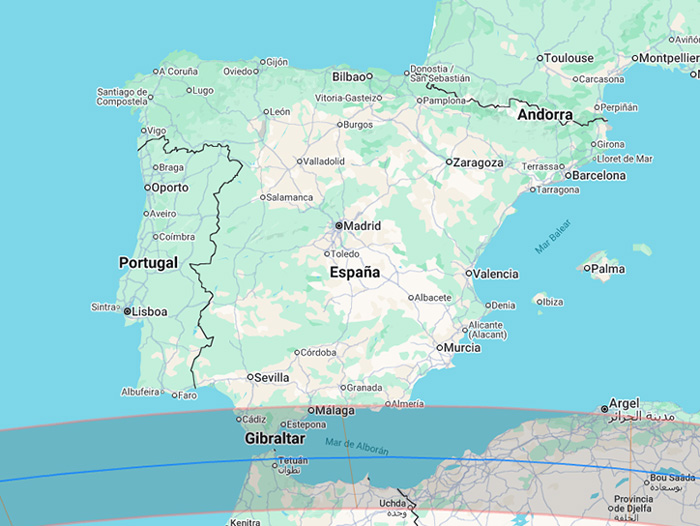
Map of the 2027 total solar eclipse © Xavier Jubier
The annular eclipse of 26 January 2028
A few months later, on 26 January 2028, another eclipse will cross parts of the peninsula – this time an annular eclipse, also known as a “ring of fire.” In an annular eclipse, the Moon covers most of the Sun but leaves a ring of sunlight visible around its edge.
This time around, portions of Catalonia will fall within this eclipse’s visibility path. It will occur very close to sunset, which may complicate viewing unless the location is ideal. The best areas will be in the south, southwest, and central parts of the territory, with Tarragona and Lleida provinces offering the strongest visibility.
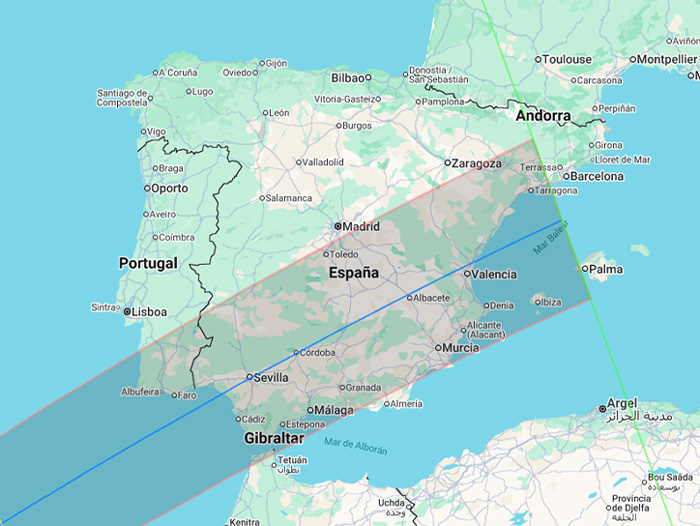
Map of the 2028 annular solar eclipse © Xavier Jubier
Resources
Here are some useful resources for planning and enjoying your eclipse-viewing experience.